In the south of France lies the small town of Pontarlier. That was where the french absinthe production started way back in the early 1800's. The Pernod Fils distillery opened their plant there in 1805, which grew to become one of the regions most important companies, providing many jobs. It also became one of the most successful companies in the history of France. Many other villages became known for their absinthe distilleries, such as Fougerolles. And the same towns yet again have production of absinthe going. In the town of Pontarlier there is also the annual festival - the Absinthiades. The reviews in here cover french contemporary absinthes. Reviews of vintage absinthes can be found in the Vintage section. Click the thumbnails to view larger versions of the photos.
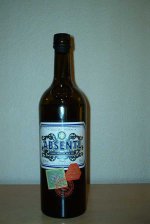
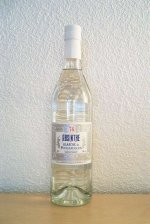
Absente
France, 55% alc. vol. (110 proof), 1.0 liter
This particular bottle was bought in USA, and therefor contains no wormwood. Instead 'petit wormwood', which is legal in the US, is being used. That alone would probably classify this as a pastis, but as the real, european version contains wormwood I will keep it here. It has a certain bitterness to it, a little like the Pernod 68, but not at all as complex and a little sweeter and have a more distinct taste of anise. It gives a nice louche upon the addition of water, but the instant louche after only a little water indicates the use of essences and star anise. Adding sugar to it increases the taste quite a bit even though it is quite sweet in itself from the start. It does somehow manage to bring out a bit more complexity in the otherwise quite one dimensional taste. I haven't yet tasted the european version, but I guess it's pretty much the same. I actually find the Absente to be quite tasty. Not at all in the way of a true absinthe distillé, but it is refreshing and not overwhelmingly sweet. If you like anise based spirits, you will enjoy the Absente.
Oxygénée
France, 55% alc. vol. (110 proof), 0.7 liter
Of all oil mixes, this is one of the most delicious ones I have ever tried. It is silky smooth yet complex in its taste. Sure enough you will taste the anise, but it's by no means overwhelming. In the background there's a nice blend of all the herbs and the slight bitterness from wormwood extracts, and I would say it is a very nice absinthe. When adding cold water, it gives a nice louche and the otherwise yellowish green drink turns perfectly cloudy. I know that this is nothing but an oil mixture and all that, but I still consider this one to be among the absolute top of those, and it compares quite well to a few of the distilled absinthes. The contemporary Oxygénée has absolutely no resemblance to the vintage Oxygénée what so ever, but it is actually much tastier than the Oxygénée Anise that was produced after the ban.
Pernod 68 - Aux extrait de plantes d'absinthe
France, 68% alc. vol. (136 proof), 0.7 liter
It's produced by Pernod, and that alone would state the obvious. This should be high quality. Sad to say, it is not. It's only a macerate and oil mix that falls right into the category of - nothing fancy really. Reading from the swedish Pernod-Ricard web site, they say it is made according to the original Pernod Absinthe recepy. I know it is not. That said, on to the tasting. Even at its high alcohol content, it doesn't taste too much alcohol. It has a fairly good blend of bitterness, anise and ofcourse, the alcohol. It is a bit hard to detect many other herbs, since it is not exactly done with any finesse. It has a nice light green, yellowish color, and gives a perfect light louche when water is added. By adding sugar the taste increases a whole lot and the bitterness smoothens and all the lacking complexity and floral character do come out a little. But only the slightest bit. Before I had tasted so many others, I enjoyed this one a lot. But with the brands available today, I don't drink it much. But, it's not all bad. I'd categorize it along with the Absente and the La Fée. Somewhere in the middle and way better than any czech swill.
Trenet Premium
France (Paris), 60% alc. vol. (110 proof), 0.7 liter
This looks like pure poison, and yes, the color is truly artificial. As I first took a sniff of this bottle, all I got was alcohol and a load of anise. But after pouring a glass, and tasting it neat, I could taste a slight bitterness and ofcourse, the quite dominant taste of star anise. But still, the alcohol was there. Upon adding cold water it gives a quite nice but overly green louche, and the taste improves a whole lot. It actually turns drinkable! This is not my favourite at all, but it's not the worst I've ever had. It's good for those late nights when your friends already had too many and won't taste anything anyway. Since it is completely artifical, taste, color, everything - I can't say I'd recommend it. Still, it was among the first brands I tried, and it didn't scare me away.
Un Emile 68 (original version from 2001)
France (Pontarlier), 68% alc. vol. (136 proof), 0.7 liter
I got this in a store when I was visiting London. I had very high expectations on this one, and I feared that would maybe make me dissapointed. I was wrong. Everything about this one is perfect. It can be enjoyed neat. It can be enjoyed with sugar and water, or water alone. Either way it is excellent.
It is a perfect blend of herbs and despite the high alcohol content it is not to apparent. Along the line of Un Emiles, this one is very straight forward. With more complextiy than the Blanche, but not as floral as the Sapin. And not at all as bitter and minty as the Gentiane. That's the supremacy of absinthe, no one is the other one alike. This one is among the absolute top of commercially available absinthes - an entirely distilled absinthe. No artificial additives what so ever. Louche? Yes indeed. But characteristic to the Un Emiles is a very light louche. To get a thicker louche one can use iced cold water, and a really slow drip. This being the first commercialized distilled absinthe since the ban in 1915, this is what stakes the path for future releases, and what most brands will be compared to - sort of a minimum standard. Atleast according to me. This is really good.

Un Emile Gentiane
France (Pontarlier), 68% alc. vol. (136 proof), sample
I had never tasted any form of Gentiane liqueur before this, all I knew was that gentiane root is very bitter. Thanks to Peter at Liqueurs de France I got to sample the Un Emile Gentiane just recently. I didn't quite know what to expect since I figured it would probably be very bitter. Upon smelling it out of the glass, it certainly smelled bitter, but after a short while the fresh scent of mint appeared and sort of smoothened the bitterness. I tried it neat and it was ofcourse quite bitter and a bit dry, but it was still quite palateable and I did enjoy it. Upon adding iced water to it, it produced a light louche, characteristic to the Un Emiles, and the character of the drink changed a bit. The freshness of the mint seemed to overpower the bitterness from the gentiane and they made a perfect match. I didn't quite know what to think of it all at first, but while sitting there, talking and slowly sipping the Un Emile Gentiane, it sort of grew on me and I can honestly say that I really like it. If you're not too much of a sweet-tooth I sincerely recommend you to get this one. A strange, but excellent blend of herbs, quite the bitter gentiane but the wonderful fresh mintyness. Ofcourse, this one is also a Liqueurs de France exclusive product, which means you can only get it from http://www.absintheonline.com/.

(Picture courtesy of Peter at Liqueurs de France)

Un Emile Sapin
France (Pontarlier), 68% alc. vol. (136 proof), 0.7 liter
So, at my visit to Paris I got hold of this, among others, at the excellent wine and spirits shop Les Caves du Roy, up at Montmarte. Since I have tried the other Un Emiles and love them all, I figured there could be nothing with this one that would turn me down. And I was right, it's mighty nice. It's quite hard to explain the actual taste of it, unless one is familiar with other Sapin liqueurs, and I've heard people mentioning Gin. I guess most people know the taste of Gin so I'll try taking it from there. With the slight bitterness and floral character of the regular Un Emile 68, but with an added special sort of forest-iness of the Sapin it calls for quite the sensation. I tested it neat at first, which was quite good. A good bit of heat, but it's in no way burning here. Adding water to it, produces a light green louch and the aromas tend to come out and it smells wonderful. I tried it both with and without sugar, and I see no reason for adding sugar to it, but if you like it, maybe just for the ritual, you could ofcourse use a small sugarcube instead. There really is no reason for sugar. Tasting it now, with water added, was great. I am still having trouble describing the taste in words but it's more mellow than the regular Un Emile 68, it's got the bite of a Gin-type liqueur but not at all as dominant. And then this mixed with the touch of anise. It somehow blends in perfectly. This one is something you sit, sipping slowly, trying to figure out the various tastes and just enjoy.
Un Emile La Blanche
France (Pontarlier), 68% alc. vol. (136 proof), 0.7 liter
From Absinthvertrieb Lion (http://www.absinthvertrieb.de/) I got this bottle of Un Emile La Blanche. First off it's one of the first absinthes in the style of a Suisse La Bleue to be made comercially available. By using this plain type of bottle, with a regular screw on cap, it gives the feeling it comes right of the clandestine stills in the Swiss mountains. When removing the cap it strikes me that this is actually not like the ordinary Un Emile 68. It has a more distinct spirit kind of smell, and the anise and wormwood are more apparent. Yet, it's smooth and not to much of anything. This is ofcourse not that strange, since the thing that differs the two, are the last coloring step that is made to the other Un Emiles. In that step, not only color from the herbs are added, but ofcourse also taste, which adds to the complexity of those. Tasting it neat surely gives a burn, but it's in no way the alcohol alone. The wormwood is very detectable and the anise comes slightly afterwards. Adding sugar to it smoothens the taste and I love it. It gives a nice white louche when adding water. I had maybe expected it to be a bit thicker, but it's just nice. I highly recommend this one and this far it's at the top along with the White Fairy - among the Blanches.
White Fairy - Absinthe Blanche
France (Pontarlier), 60% alc. vol. (120 proof), 0.7 liter
Thanks to Peter at Liqueurs de France I hade the opportunity to sample the White Fairy when I was visiting Paris. It's an Absinthe Blanche, and it's ofcourse distilled, and also an exclusive Liqueurs de France product. Before this, the Un Emile La Blanche was my absolute favourite among the Blanches, but after tasting the White Fairy I've definitely found a new one for the top position. It has a lower alcohol level of only 60% as opposed to the 68% of the Un Emile La Blanche. The lowered alcohol itself, contributes to the White Fairy being the perfect smooth it is. It also brings out the herbal notes in a better way then many others. The taste of anise is definitely noticable, but it's in no way dominant. It blends perfectly with the rest of the herbs. When water is added, it produces a nice pale white louche and the textures of the drink is even more complex. I haven't yet tried adding sugar to it, but I don't find any need for that. It's a superb absinthe blanche right out of the bottle. I can highly recommend this one to anyone. You should get it.

Verte de Fougerolles 72
France (Fougerolles), 72% alc. vol. (144 proof), 0.7 liter
Verte de Fougerolles 72 is another Liqueurs de France exclusive product. Distilled in Fougerolles, France. It's a light green yellowish color, and it smells just wonderful. When smelling it neat from the glass, one can immediately scent the complexity of this absinthe. Ofcourse it's quite hot from the 72% alcohol, but that is somehow overpowered by the blend of herbs. Tasting it neat was actually a pure pleasure, it was really tasty and could easily be consumed as a digestif - neat. But, adding water to it reveals all the notes, all the various flavours of the mixture and produces a light greenish louche. This one beats all the other absinthe vertes I've had, apart from the vintage CF Berger - ofcourse. Again, thanks to Peter from Liqueurs de France, I got to sample a prototype of the Verte de Fougerolles which was rejected, and instead the now available composition was chosen for commercialization, and I can understand why. The prototype I got to sample had a lot more anise in it. It produced a thicker louche, but the anise was to overwhelming. Although it was very good, the final product is much more complex and tastier. If I should compare the Verte de Fougerolles to any other I've tried, It'd have to be the Un Emile 68. This one is much smoother and even though it's at a higher alcohol level, it doesn't have that alcohol heat. As a side note I can say that the louche of this one was very close and similar to the one of the vintage 1910 C.F Berger. Lovely. Among the vertes, this is the number one of the commercially available ones.

A couple of days ago I finally got around to open the bottle I've got with the "new" Verte de Fougerolles. A slightly modified batch from the first one. With a little more anise and completely unfiltered it presents a little more bite in the taste, without being to heavy on the anise. The anise also helps producing a thicker louche than the "old" version. Skipping the filtration process adds quite a bit to the taste. It's still the top verte!

Blanche de Fougerolles 74
France (Fougerolles), 74% alc. vol. (148 proof), 0.7 liter
With a recipe directly from the pages of late 19th century manuals, the Blanche de Fougerolles is made with a grape-alcohol base, and combines grand and petite wormwood, green anise, hyssop, veronica, camomile, génepi, fennel, coriander and angelica; all individually distilled into full 80° alcoholates, blended, and then reduced to 74% abv.

That sounds tempting, and challenging. Can it really be as good as it sounds? Yes it can. It is even better than I imagined. There are several blanches/bleues out there, but none of them can compete with this one. My all time favourite blanche, the White Fairy, have got some serious competition here, and it's been pushed down to a second place... This one here is a winner. Just as the Verte de Fougerolles this one is a Liqueurs de France exclusive product.

Even though it's at the high abv of 74% it smells very little of alcohol. Instead it reveals an amazingly smooth smell which literally fills the room after the nice wooden topped cork is squeeked out of the bottle. It is clear that the ingredients used hold very high quality and that they really do form the most perfect blend I've ever experienced in a "modern" absinthe. Upon diluting it with ice water it slowly presents a perfect, thick, milky white louche which further enhances the aromas of the drink and reveals even more for the nose to enjoy.

Apart from the very fine taste of quality Florence fennel and anise there is a little something that makes this drink so extraordinarily smooth that I haven't yet figured out. Some suggest it would be from high quality hyssop, and I believe it might. The veronica adds a little to the taste as well, just as in the Verte de Fougerolles, where veronica is also used. This here is one very complex, perfectly crafted absinthe. A complex recipe doesn't necessarily mean a well tasting complex drink, but in this case the result is astonishing. This is a must have for anyone even remotely interested in tasting top quality absinthes. This one is the best comercially available blanche this far. No doubt about it.

Spiritueux à l'Absinthe, Emile Coulin
France (Fougerolles), 55% alc. vol. (110 proof), 0.7 liter
The Emile Coulin is at 55%, produced in Fougerolles and it comes in a very nice bottle with a regular wine style cork which is sealed by the use of sealing-wax. It certainly looks great, but it's not that funny when it comes to opening it. If you're not careful enough, you'll end up with a load of red flakes from the sealing-wax in your absinthe.

After getting it opened and smelling it out of the bottle I could detect a light anise scent, the smell of the alcohol, a slight bitterness and then actually not that much more. I was a little surprised that an absinthe at only 55% could actually smell that much of alcohol and relatively little of anything else. It reminded a little of Francois Guy, but with less anise.

Pouring some in the glass reveals that the Coulin is almost completely clear, which could be the reason for it's lack of complexity and floral "bouqet". Tasted neat, it's very straight forward, much in the way of a blanche, I'd say. However after a short while the rather smooth taste turns into a dry, bitter finish. A bitterness that I recognize from many other macerate and oil mixes. The bitterness that is probably the reason for why it's been sweetened.

I tried it both with and without sugar, and either way works just as good. If you add some sugar to it, that dry macerate bitterness mellows a bit more, but it's still there. Added water produces a thick white louche and a quite appealing character of the drink appears, and I would rate this one just below the Abisinthe 72 and the Francois Guy. The only thing that lowers my oppinion on this one, is that dry bitter taste that always come at the end of each sip. But then, on the bottle it is clearly stated that it contains alcohol, sugar, macerates and distillates, so what's there to expect?

All in all, at a price of under 20 Euros, I think it is very well worth the money. But it doesn't by far compare to the high-end line the commercial ones. A fairly good absinthe, that would however need some tweaking to get rid of that bitter finish.

Versinthe La Blanche
France (Provence), 57% alc. vol. (114 proof), 0.5 liter
I got this bottle at Juuls Vinhandel in Copenhagen, Denmark. Too bad it only comes in a 0.5 liter bottle. I personally think that's too small, but what to do. Upon opening the bottle, I actually got a little disappointed. They've used a rubber cork! Why would you do that? Other than that, I'm actually pleasantly surprised. I'd say this one is quite well balanced and was actually very good even neat. Upon adding water it produces a very thick white louche. And the addition of sugar increases the taste a bit, but it's not at all necessary. Since it's a blanche, and originally classified as an Amer (bitter) it is a bit more flat and harsh than an Absinthe Verte. And it lacks the complexity of the White Fairy and Un Emile Blanche, but I still find it to be quite allright. This one was a whole lot better than I had expected, and I do recommend it to anyone trying out absinthe. However, if you are looking for something to match a Suisse La Bleue, I'd stick to the White Fairy or the Kübler 57.
La Fée Absinthe (today known as La Fée Parisian)
France (Paris), 68% alc. vol. (136 proof), 0.7 liter
This one was purchased at Selfridges & Co in London a while back. Made in France, and according to manufacturers website; "La Fée Absinthe is the only absinthe accredited by the French Absinthe Museum, and it's curator Marie-Claude Delahaye." That alone does not mean a thing to me, other than it probably is a lot better than most other brands. I need to make my own oppinion. So, I did just that. The bottle is a clear glass bottle, thus leaving to logic that the fluid itself is very green, and I'd say truly artificial. It actually tastes quite allright neat, but it does lack something. However, once tasting it with water it is quite good. And adding sugar to it, increases the taste even more. It is along the line of Pernod 68 and Absente. A well balance oil mix, which is not overly bitter. And this one is not as heavy on the anise either. It is actually a fairly good absinthe, and I think that anyone trying out absinthe should at some point have the La Fée. If for nothing else, it should be a reference for oil mix absinthes, along with the Oxygénée. It sure beats most other commercial oil mix absinthes available, but it's nothing I sip regularly.
Père Kermann's Absinthe
France (Paris), 60% alc. vol. (120 proof), 0.7 liter
It had been a while since I bought a new bottle, so I went to the Swedish Systembolaget (government owned liqourstores!), and got this one. I pretty much knew what I'd think of it, since I've had this one in some bars before, but then as shots. Now, I got it home, and me and a friend poured a glass each. Smelling it wasn't a pleasant surprise at all. It smelled alcohol and candy. The color is artificially green-blue, comparable to mouthwash or washer fluid! We tasted it neat, and it tasted awful. We both decided to add 2 sugarcubes to it, and some iced water. But unfortunately it didn't improve anything. This is undrinkable. It doesn't fill one single void out there. It's a shame this one is even sold. When adding the iced water absolutely nothing happened. No louche at all. Bah! But then again, they're not stating to be authentic in any way either. Other than the name, imposing that this would be an absinthe. On the back of the bottle it clearly states the contents: alcohol, water, aroma, wormwood infusion, sugar and coloring (E133, E102). There is no way in the world I can recommend this to anyone. I doubt it would even be good for mixing a drink with.
Lemercier Abisinthe 72
France (Fougerolles), 72% alc. vol. (144 proof), 0.7 liter
And yet again, thanks to Mr Lion at Absinthvertrieb.de, I had the chance to sample another top quality absinthe. The Lemercier Abisinthe 72 is acutally very nice. It is almost totally clear with just the slightest tinge of yellow. It smells very smooth, although it's at such high alcohol level. Tasted neat it sure burns and it's got a good bit of heat, but that mellows out into a nice herbal mixture. With water and sugar added it produces a nice white louche, and the taste smoothens even more. Despite its high alcohol level one could use less water than for many other absinthes, since too much water flattens the taste way to much. I think this is a very good absinthe, and it's one of the kinds that I would definitely treat any "beginner" that have never tasted absinthe. So. It's very appealing and I sincerely recommend it. It's nothing out of the ordinary, but it's way ahead of any oil mix available.
Lemercier Abisinthe Amer 72
France, 72% alc. vol. (144 proof), 0.70 liter
From the Lemercier distillery in Fougerolles, France comes this distilled absinthe. The Abisinthe Amer 72 comes in the same type of bottle as the regular Abisinthe 72 and the 45. Difference is the color of labelling and neck-foil. In comparison there is actually quite a difference between the regular Abisinthe 72 and the "Amer", and to me - for the better.

Upon opening and smelling out of the bottle I don't get much more than a rather smooth alcohol smell slightly enhanced by anise and wormwood. This being the "Amer", french for "bitter", I expected a lot more wormwood than this, it seems pretty well balanced though. After pouring a dose into a glass the smell does alter slightly, and more of the herbal character is revealed.

Adding iced water to it produces a nice, thick louche and during louching a finely divided top layer slowly disappears with the water. The taste of the Abisinthe Amer 72 is very distinct. At first it tastes a bit spicy, which turns into a nice herbal character instead. There is absolutely a good bit of wormwood taste, but I believe there's and addition of wormwood extracts or oils added to it, to produce its distinct sort of spicyness. It's not bad at all but it doesn't have the regular taste of distilled wormwood only. Either way, the spicy kind of herbal notes is finely tuned with the freshness of anis.

The Amer strikes me as a more carefully prepared absithe than the regular Abisinthe 72. I like that one also, but this is definitely better. Adding sugar to the Amer obviously produces a sweeter drink, but also blends the different tastes a bit. The Amer works very well both with and without sugar.

My conslusion about this one is that I really do like it and recommend it to everyone. It's a very good absinthe with a little more taste than it's sisters. Previously the back labels on the Abisinthe labels instructed on how to prepare your absinthe using the burning sugar method. The Lemercier distillery have now decided to remove this reference and only write instructions for the traditional french ritual. I will take some credit for that...

View additional photos: 01

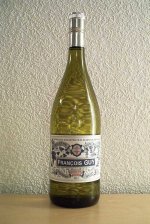
Francois Guy
France (Pontarlier), 45% alc. vol. (90 proof), 1.0 liter
I had the opportunity to sample the Francois Guy thanks to Markus Lion at Absinthvertrieb.de. This is definitely very good absinthe. It's distilled and a nice light yellowish/green color. Upon smelling it, it reveals quite an appealing floral smell but a bit too heavy of anise. I must say that this far, the Francois Guy is among the best when tried neat. Tasted neat, it has a smooth, nice taste. Probably because it is at the lower alcohol level of 45%. And the anise takes away most taste of alcohol. The downside is that the anise takes away most other tastes aswell. When adding water and sugar to it, the taste smoothens even more, and it produces a fine white louche. However, at this stage the Un Emile 68 raises above the Francois Guy. It is tasty, but it lacks all the herbal characteristics of the Un Emiles and the Verte de Fougerolles. If it would be lighter on the anise, and rasied to a 68 degree alcohol level, I'd say it would compete well with the rest at the top. All in all, the Francois Guy is worth every cent it costs. I like it.
Jade Liqueurs Nouvelle-Orléans
France (Saumur), 68% alc. vol. (136 proof), 0.75 liter
After years of waiting it is finally here. Jade Liqueurs have released their first absinthe. The works of T.A Breaux, and mighty fine works at that. The Jade line of absinthes are only available through Liqueurs de France. Nouvelle-Orléans is now also available for ordering at the Swedish Systembolaget liqour stores.

The Jade Nouvelle-Orléans is without a doubt one of the finest contemporary absinthes I have ever had. Released at the same time as the distillers proof of Verte Suisse 65, it certainly had great competition, but there's enough of a difference between the two to actually share the top spot.

My memories from tasting a prototype of the Nouvelle-Orléans had my expectations pretty high up but the final release exceeded it all.

Upon opening the bottle there's a really wonderful scent reaching my nose, very smooth and very fine fennel and hyssop certainly break through the truly complex herbal composition.

The color of the Nouvelle-Orléans is a light peridot green, actually a bit greener than I remembered from the prototype, but most definitely appealing.

I had a little sip of it neat, and though it's at 68% it's actually very smooth on the tongue. Dilluting it releases the most wonderful pale white, greenish louche and the was literally filled with all new smells. The character of the drink is so unbelievably smooth, yet full of taste.

Apart from the hyssop that I consider give that little extra touch to the Nouvelle-Orléans, the fennel is what is most dominant -- atleast to me. There's a good bit of wormwood that lingers in the back along with a very subtle taste of anise. Neither breaks through too much, just stays in the background.

I tried it both with and without sugar, and either works just fine.

All in all, this is one masterpiece, perfectly crafted, beautiful bottle and labelling, wonderful color, perfect louche and -- this far -- unbeatable taste.

View additional photos: 01 | 02 | 03

Jade Liqueurs Verte Suisse 65 (distillers proof #1)
France (Saumur), 65% alc. vol. (130 proof), 0.75 liter
The Verte Suisse 65 is a replica of the pre-ban swiss C.F. Berger. Painstakingly reproduced after years of research and testing by Ted Breaux. As the other Jade Liqueurs absinthes, this is a Liqueurs de France exclusive.

Being a limited released distillers proof, the bottle have no actual labelling, apart from the little gold label telling the name and producer. Distillers proof pretty much means that this is sort of a pre-release and final test batch before going into large scale production.

So, the Verte Suisse 65 distillers proof was released at the same time as the Nouvelle-Orléans. Though the two have some similarities, they still differ a lot from each other.

The Verte Suisse is very gentle on the nose. The first things that find their way out of the bottle are the scents of fine anise and very good wormwood. Pouring some in the glass reveals a color very similar to that of the Nouvelle-Orléans, light lime-green. A small sip of it neat does give a bit of heat from the alcohol, but that is quickly overpowered by the taste of fine wormwood and anise. In the back there's a lot more...

Once dilluted with iced water it gradually produces a very fine louche. The very same louche I remember from the true vintage pre-ban Berger. The water also let lose the other aromas of the drink. It is now easy to detect the notes of hyssop which create the smooth and, to me, floral character of the Verte Suisse 65. After each sip there's a slow, lingering minty sort of bitterness from the wormwood, which in this absinthe is much more detectable than in any other I've tried.

So, how does it compare to the real vintage pre-ban Berger? Well, it compares very well to the 'real thing'. The pre-ban, being nearly 100 years old, was ofcourse affected by time and light. But only in the way that tastes had mellowed out a bit, and blended more easily. The characteristics of the real pre-ban Berger is still here. It is still the real garden in bloom. It is still magic to see the thick, fine louche raise from the bottom of the glass, and one can easily imagine that this would be exactly what the C.F. Berger tasted like 100 years ago.

The top position of absinthe vertes is shared by the Nouvelle-Orléans and the Verte Suisse 65. If you're looking for the real touch of the Belle Epoque and the glittering cafés of Paris, these two absinthes is the way to travel back.

A review of the pre-ban C.F. Berger from circa 1910, can be found here.

View additional photos: 01 | 02

Jade Suissesse Absinthe Cocktail
France (Saumur), 17% alc. vol. (34 proof), 0.7 liter
Absinthe Suissesse, a cocktail introduced in New Orleans in the 19th century now bottled and ready to drink. Served chilled or over ice this is actually one tasty cocktail.

My first thought about this one was, "egg white and absinthe?!" - but yes... Egg white and absinthe. The taste of this cocktail is excellent. A perfect, slightly creamy mouthfeel but without getting thick or sweet, perfectly lazed with the taste of fine Jade absinthe. A combination at its best. None of the ingredients, absinthe, egg white and orgeat syrup, takes over too much.

I can honestly say that this was actually a very pleasant surprise to me, and this has been a perfect drink during the holidays. With many guests, each and everyone have been treated at least one glass each, and every one have really liked it, most loved it.

The Jade Suissesse is something that I actually recommend everyone to keep at home, even those who don't drink absinthe will surely enjoy this one.

View additional photos: 01 | 02 | 03

Jade Absinthe Edouard
France (Saumur), 72% alc. vol. (144 proof), 0.75 liter
Another Jade Liqueurs product. This one is a distillers proof, though fully labelled, of the forthcoming Absinthe Edouard. The Absinthe Edouard is a clone of one of the finest absinthes during the Belle Epoque, Edouard Pernod. I got this one from Liqueurs de France...

This one, as the other Jade absinthes, is distilled using the old Pernod Fils alembics located at the Combier distillery in Saumur, France.

Now, on to the tasting. The Absinthe Edouard presents a very fine, intense green color. It is amazingly clear and bright, yet there's nothing artificial about it. When pouring the Edouard into the glass, there are so many wonderful scents coming out, it's almost hard to detect them. A fine complex aroma that slowly reveals its lingering textures. Fennel, hyssop, anis, wormwood - the most dominant ones, and of course most common ones as well. Slowly dripping iced water in it presents thick oily traces in the absinthe, as the louche slowly appears and clouds the drink. It turns to a very fine bright light green louche.

The louche brings out even more of the aroma, and the room is literally filled with wonderful herbal and floral scents perfectly blended together. No holding back... This calls for a sip. The Edouard has a most wonderful mouth-feel. Rich, full and complex - yet extremely smooth and almost cotton like. The hyssop surely reveals itself along with the wormwood that comes sneaking in from the back of the mouth and just holds. The taste of the Edouard is very nice. The taste is floral, to say the least, and though this is only a distillers proof, it is great. The first glass I had was immediately after opening the bottle. The absinthe itself was then more or less un-aged, and still - it was lovely. Now, almost a month later, the Edouard has become a much more mature absinthe. It has turned so much better in only this one month, one can only hope what will come after more ageing. Naturally the final product will be left to age for a couple of months before distribution...

To conclude this one, I can only say that this is one fine absinthe. I could say, Edouard! I love you! But I don't like the sound of myself shouting just that...

View additional photos: 01 | 02 | 03 | 04

Mannarini Liqueur Aux plantes d'Absinthe
France - Corsica, 55% alc. vol. (110 proof), 0.7 liter
This particular absinthe comes from the little island of Corsica, just outside the french and italian coastlines. That does make this absinthe unique - and... that's it.

Ok, there's one more thing that makes this absinthe unique, and that's the fact that it won an absinthe competition in Marseilles, France. Having had a few glasses of this one, I would say that tells more about the judges in that competition than this "absinthe".

For starters it's artificially colored, it's sweetened and it's pretty much just artificial taste. The first few sips I had was not all bad, but the more I had the harder it was to drink it.

The smell is nothing spectacular, much like any mass produced essence mix found anywhere else. It does present a nice, but maybe a little too green, louche, but adding that water to it, doesn't help the smell. Adding sugar to this one makes it almost undrinkable since it's already heavily sweetened.

There's really not much I can say about this one. There's no need to buy it unless you have a terrible urge for sugar and extracts and colorants. There are many better products at the same price.

View additional photos: 01

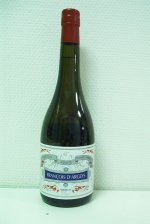
Francois d'Argeys
France (Fougerolles), 45% alc. vol. (90 proof), 0.70 liter
This particular absinthe is no longer in production. It was first released in 2001, in the town of Pontarlier, France. Distilled by Lemercier, but never labelled with their name. Alledgedly made for someone who ordered it, but the resemblance between the label (and name) of the Francois Guy, and the bottle shape of the Un Emile, which where both released just prior to the Francois d'Argeys, does hint that this was also meant to compete with those two, not only in taste...

So, the question is - how does it compare to those two - in taste? I'd actually have to say that it competes very well with them both. It presents a rather anise-laden smell when opening the bottle, but not as much as the Francois Guy. It has a little more of the toned down character of the Un Emile. However, this is not mainly for comparison, but for tasting the d'Argeys for what it is.

The Francois d'Argey is actually not that bad. A pity that it's only at 45%, but still a nice enough drink. It louches very well, and even though it doesn't present any surprises or any overwhelming complexity, I do like it for an occassional drink. The taste is mainly that of anise, but as I said, not as overpowering as the Guy.

I'd say that this is actually a fairly good absinthe. Maybe nothing I'd drink regularly, but certainly something you could try if you got the chance.

View additional photos: 01

Muse de France #1
France (Fougerolles), 69% alc. vol. (138 proof), 0.35 liter
Muse de France is a product manufactured at the Lemercier Distillery in Fougerolles, France. It is not a product of Lemercier, but from Frenchman Phil (http://www.musedefrance.com/). This is variation number 1 of two available at the time this is written. The two are test runs in order to get feedback on results and to make a good final product. This review is for recipe number 1.

Recipe number one is called an absinthe "Ordinaire" by Frenchman Phil. I can understand that. It is nothing out of the ordinary. It's not bad, but not all good. The #1 is made using more wormwood and less anise and fennel, thus making it more bitter. The taste at first is quite alright, but it swiftly turns into a rather bitter finish. Using sugar takes away the worst edge of that and it does become drinkable, but nothing I'd drink regularly.

The #1 is however a good contrast to the more common absinthe found in the #2, and gives a view of what different amounts of certain ingredients does to the taste and aroma. Overall I'd say that it's a decent drink, but too bitter for my taste.

Muse de France #2
France (Fougerolles), 69% alc. vol. (138 proof), 0.35 liter
Muse de France is a product manufactured at the Lemercier Distillery in Fougerolles, France. It is not a product of Lemercier, but from Frenchman Phil (http://www.musedefrance.com/). This is variation number 2 of two available at the time this is written. The two are test runs in order to get feedback on results and to make a good final product. This review is for recipe number 2.

The Muse de France #2 is a lot more like what you'd expect from a good absinthe. It presents a smooth taste, rather rich mouthfeel and a nice enough louche. I know, it doesn't sound like something really special, and maybe it isn't but for being a first shot at comercial scale production I think it's quite alright.

The MdF #2 is actually something I'd enjoy drinking every now and then. It does need some tweaking and additional work in order to be really great, but I think that is something that will most certainly happen. Someone mentioned the MdF absinthes to a little like a good first shot at making HG, and I'd say that pretty much sums it up. Presenting a nice smooth blend of the most common herbs, wormwood, anise and fennel are the most dominant ones. The wormwood lingers in the back and let the others play a greater role - something I like. There is a certain alcohol smell and heat that does take away a few points from the Muse de France absinthes, but as I said, it needs just some more work. It may not be the best absinthes I've had, and there may be better absinthes available, but the Muse de France #2 is definitely on the way. It is a nice enough product.

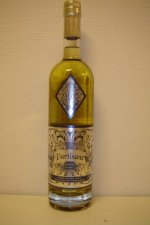
Absinthe Partisane
France (Pontarlier), 65% alc. vol. (130 proof), 0.7 liter
This absinthe was one I bought while in Pontarlier for the Absinthiades in October. It's actually distilled by the Guy distillery, makers of the Francois Guy absinthe. It is made specifically for Alandia in Germany.

Tasting it is not a very special thing at all. It is rather uninteresting, tends to go towards the anise bomb that Francois Guy is but it stays a little less so. There's a noticable difference in the amount of wormwood but not enough. Over all the Partisane is a rather boring absinthe and nothing I would recommend.

View additional photos: 01

Libertine Amer
France (Fougerolles), 72% alc. vol. (144 proof), 0.7 liter
And this is another one that I bought in Pontarlier, sadly...
The Libertine range of absinthes come from the Paul Devoille distillery in Fougerolles, France. The same distillery that makes the Charlotte (which I believe is pretty much just rebottled Libertine 55) and also the "Emanuelle" for Vom Fass (which also is Libertine 55...). It is also the same distillery which, with the help of the Liqueurs de France people produces the Verte and Blanche de Fougerolles.

The regular Libertine 55 and 72 are drinkable absinthes which I think many people can enjoy, at least novices... The Libertine Amer is something I think very few will enjoy.

It's got a pretty good color, deep green and very nice. But once the bottle is opened and I move it closer to my nose to take a whiff, I'm scared. It smells mainly of alcohol and gives off a bitter, dirty nose. I pour some in a glass hoping that it will not be the same then, but it is. Adding water to it reveals a nice louche and still a decent color. The nose remains the same, an odd intense sort of dirtyness.

At this point I haven't added any sugar to it yet and I will pay dearly for that. It is obvious that they have simply added wormwood oils to get the "amer" version. It is obtrusive! It has this really sticky bitterness that is typical to the adding of essenses. The taste of the Libertine Amer is nothing special at all, not even once you get past the bitterness. It's mainly anise. To be able to continue drinking the glass, I dissolved a sugar cube in some water and added that. It didn't help. I added another one - it still didn't help. I never finished the glass. This is another one of those bottles that will last forever.

View additional photos: 01 | 02 | 03

Created: 5/11/2006  
Lemercier Abisinthe 45
France (Fougerolles), 45% alc. vol. (90 proof), 0.7 liter
Several months back I recieved this bottle from Lemercier in order to compare it to the other Abisinthe variations. Since then I've had the chance to have several glasses with some time apart. Sadly, that didn't make much of a difference.

The Abisinthe 45 is merely a mediocre absinthe compared to what else is available today. With a very pale yellowish color and a scent leaning too much on the citrusy side and with too much alcohol breaking through it's not very good. It louches very nicely though. Thanks to its lower alcohol level it louches pretty fast but it turns into a nice opaque cloudyness but still with that yellowish tint.

The Abisinthe 45 has a nice smooth and mellow taste and mouthfeel at first but after a short while it turns to a strange dry and disturbing feeling on your tongue.

I have no idea if there's actually any difference between the Abisinthe 45 and the 72 but the 72 version has a whole lot more body to it and is definitely more drinkable than the 45. If you feel you want to try any of the Abisinthes, I'd go for the 72. There is really no need to spend money on the 45 today.

View additional photos: 01 | 02 | 03 |

Created: 5/30/2006  
Absinthe Blanchette (Combier/Jade)
France (Saumur), 60% alc. vol. (120 proof), 0.5 liter
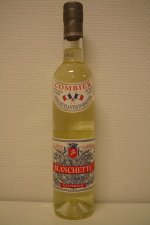
Another one from Jade Liqueurs/Combier. This time a blanche which is actually based on an old recipe once made by Combier before the ban.

A first look makes you wonder if this is really a blanche or not. There's a yellow tinge to the absinthe which one wouldn't expect from a blanche. It doesn't impart anything on the flavour and what's more important is that after only a couple of days in the cabinet (not in complete darkenss) the yellow is actually gone and it has turned blanchey.

Now then, what's this one like? First of all it differs from many of the blanches/bleues that have come out the last year or so in the way that it holds only a very faint fennel presence. It does have a nice anise taste though and it's definitely packed with wormwood. At first it seems a bit harsh on the nose from the alcohol which surprises a bit given it's "only" at 60% but that quickly fades and the fruity notes of wormwood and the lightness of the anise takes over.

Adding water to it produces a nice and steady louche and releases more of the drinks aroma character. Tasting it confirms what the scent told. It's got a good bit of wormwood nicely countered by mainly anise. It's really nice.

It's a pity this only comes in 0.5 liter bottles yet but I'm told there should be 1 liter bottles soon. That's good cause this one is draining fast.

View additional photos: 01 | 02

Created: 10/26/2006  
L'Artisanale
France (Pontarlier), 72% alc. vol. (144 proof), 0.5 liter
When I was in Pontarlier for the 2006 Absinthiades I had the pleasure of getting a bottle of the brand new (ok, it's been aged for six months prior to release...) L'Artisanale. Made by american Eric under the supervision of and in co-operation with Liqueurs de France at the Distillerie Les Fils d'Emile Pernot in Pontarlier, France. Made to be a traditional Pontarlier style absinthe and to be the first true high quality absinthe distilled again in Pontarlier after almost 100 years of nothing.

To tell the truth, they did quite well. The L'Artisanale is a very good quality absinthe with excellent herbal qualities and a wonderful floral yet spicy aroma. It's a greenish olive tint unlouched but turns to a nice opaque green after adding iced water.

There is a nice wormwood character to it with hints of Pontica and Fennel lingering and blending well with the anise. When adding water to it it blends nicely and lends a pleasant fragrance to enjoy while drinking. The one and only "negative" thing I have to say really isn't all that negative... I personally think the L'Artisanale give too little of a "surprise" but then again, it's a well carried out Pontarlier style absinthe and there is little surprise to expect from that. It tastes like absinthe. It's very well made though and I definitely like it.

If you want one you should probably hurry up and get one as soon as they start selling them (they have not yet been publicly released when this is written, in the end of October 2006) since there will only be about 170 or so bottles for sale and no one knows if it will ever be made again. Where to get it? Well, obviously from Liqueurs de France.

View additional photos: 01 | 02 | 03 | 04 |

Created: 11/27/2006  
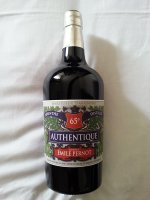
Un Emile Rouge (Les Fils d'Emile Pernot)
France (Pontarlier), 68% alc. vol. (136 proof), 0.7 liter
Red, purple, black, green, blue, white... all kinds of colors can be found in absinthes today. The majority of those with a different color than green, and obviously the transparent blanches, are artificially colored. Among the red absinthes, Serpis is probably the best known one, and also the first modern absinthe to be made red. So, why would anyone, especially a well reknowned distillery such as the Emile Pernot distillery, and Liqueurs de France go about and do something like that?

They didn't. The Un Emile Rouge is completely naturally colored. That is the difference.

Even back in the end of the 1800's there was a brand of absinthe named "Rosinette" which was a pink/red color, naturally colored.

The Un Emile Rouge is based on the regular Un Emile, the one which got an improved recipe just a while back. The red coloring, obtained from Hibiscus, lends a really unique and nice floral scent and also flavour to this one. It works nicely along with the anise and wormwood flavours of the Un Emile and actually lifts this absinthe to a new level. It's special and unique flavour really appeals to me.

The louche has always been somewhat of a problem in the Un Emile range, but with the improved formulas that has improved a bit. A really slow drip of very icey cold water actually gives a decent louche today. The louche of the Un Emile Rouge ends up in a kind of pretty greyish pink.

As a whole, this is actually my favourite Un Emile variety as of now. A nice taste and aroma, a quite rich mouth-feel which I would like to see more creamy though, and the improved louche. Quite nice indeed.

Should you get one? Yes, I think so.

View additional photos: 01 | 02

Created: 11/27/2006  
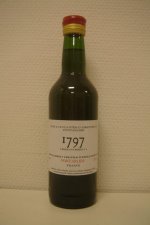
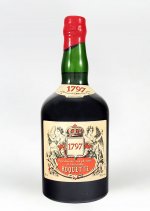
1797
France (Pontarlier), 75% alc. vol. (150 proof), 0.5 liter
When I was in Pontarlier for the 2006 absinthiades, I recieved a pre-release sample of the 1797. The sample I got was at 85%, compared to the release version which is 75%. The difference in the two weren't extremely noticable, so I will not go into details on that. I will stick to reviewing the release version of the 1797 Essai #1.

Based on a recipe dating back to 1797, handwritten with measures such as "a hand full of..." it was not an easy task to recalculate and reproduce this into what an absinthe pre-1800 would have been. The result? Very good. It comes as no surprise that the profile of the 1797 is more medicinal than an absinthe based on a later recipe. However, the medicinal profile here is still very refreshing and not actually too much of a herbal heavy bomb.

Packed with top quality Pontarlier wormwood it does pack a huge wormwood punch but it does so without being bitter or obtrusive in any way.

The louche is not completely opaque but rather a pale sort of olive tint, which isn't really unexpected from the recipe. It louches fairly well though and I'm not disappointed in any way. The 1797 does do a good job at showing what abisnthe might have been like prior to it's large scale production and super-comercialization. A nice product, both taste wise and in a purely historical aspect.

I think the 1797 is unique in the way that it manages to be very herbal and sort of medicinal without it becoming too heavy or too much of anything. It's a beast of an absinthe and taming it is a pleasure.

View additional photos: 01 | 02 | 03

Created: 1/26/2007  
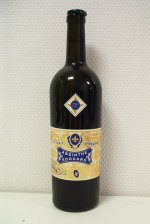
Jade PF 1901
France (Saumur), 68% alc. vol. (136 proof), 0.75 liter
Finally, the long awaited fourth release from Jade Liquors. This time it's a reproduction of pre-ban Pernod Fils and, before I kick off the actual review - let's just say it's a much better job at keeping up the Pernod Fils heritage than the Pernod Absinthe of today...

So, first of all with a beautiful label, clearly inspired by an original Pernod label from the late 1800's the presentation is wonderful. The scent that rises from the bottle when uncorking it is truly wonderful and actually does remind of a well preserved pre-ban Pernod.

The color of the PF1901 is a really nice light peridot green which louches up really nice into a very light green - almost white.

The scent of anise and wonderful wormwood fills the room and calls out to be tasted. The very fruity anise along with the great wormwood are paired with a touch of mint and sweet fennel. The aroma opens up even more after the addition of water and goes into full bloom.

The taste is another nice part of this. Personally I think this is the best Jade absinthe yet and it is actually quite similar in character and taste as a pre-ban Pernod. sure enough there are qualities in a pre-ban that cannot be easily reproduced, especially the 90-100 years of ageing but it's a mighty impressive work.

The taste is really quite smooth with a nice lingering bitter finish. Not dry bitter but rather floral bitter. Something you only find in a well made product using high quality wormwood.
The anise is definitely there but not numbing or overwhelmig in any way. So, is there nothing at all wrong with it? Well, nothing really wrong no. There's a very characteristic smell from the wine-base that can be recognized in all the Jade absinthes which to some may seem odd or like a bit of a "funk" but personally I don't have any problem with it. In short, this is definitely one of my all time favorites.

Do I recommend it? Yes - whole heartedly.

View additional photos: 01 | 02

Created: 2/28/2007  
Wormwood Blanche Edition Limitee
France (Pontarlier), 75% alc. vol. (150 proof), 0.5 liter
Distilled at the Emile Pernot distillery in Pontarlier. Packed with wormwood and some additional herbs for good measure. What do you think about that?

Seriously, the Wormwood Blanche is a wormwood bomb, no more - no less. However, if you think that would in any way mean it's bitter, dry and undrinkable you are very very wrong.
Wormwood, when distilled, is a very floral and good tasting plant. The dry bitterness is long gone and left is the exact qualities we want. Of course it helps to use quality herbs and in this case it's the best! Locally grown Pontarlier wormwood of superb quality. Considering the herbal ratios it still presents a very interesting aroma which is surprisingly complex. Add to that the fact that it actually does present a rather ok louche even though the odds are very much against it. Though a bit weak it still beats a lot of other absinthes.

Water added to the Wormwood Blanche lets the aroma bloom out even more and a really nice and enchanting drink is presented. The mouth-feel is very full and rich and far smoother than I expected which further proves the quality of herbs and work put into it. There's just a very slight dry feeling for a second which is smoothly countered by a nice touch of sweet fennel and anise to counter it. Nicely done.

I am not easily impressed by products made simply to stand out and be "unique" but this one certainly did knock me off my feet. It's well made, it's top quality and it's certainly unique on the absinthe market. Let's just hope there will be more made.

Created: 2/19/2008  
Lucid Absinthe Superieure
France (Saumur), 62% alc. vol. (124 proof), sample
It took me a while to get hold of a sample of this mainly because it sold out as soon as it hit the stores in the U.S. Once I finally got it, it took me forever to review it - such is life sometimes.
So, Lucid Absinthe Superieure - the first authentic absinthe to be legally available in the U.S since their ban in 1912. That is of course a merit on its own and for that Viridian, the distributor, deserves a bit of credit. It was first released in New York and has since spread like wild fire across several other states. It is yet to be available in Europe and I don't know if it will be...

Made in Saumur at the Combier distillery it's not that hard to figure out who's the maker of this - it's Ted Breaux of the infamous Jade Absinthe line. First guess is that this will be a good absinthe and certainly a good thing for U.S based absintheurs to be able to get in the local liqour store. To tell the truth, the Lucid was a bit disappointing given the expectations and comparison to other products coming from Jade, but I still think that it's a lot better to have this in stores rather than some vile window-washer-colored artificial "absinth".

Anyway, the Lucid lacks the nice vibrant colors I'm getting used to from some of the Jade absinthes. It holds a much browner shade of green and isn't as pretty. At first it presents a nice enough aroma but this is sadly quickly overpowered by a punch of alcohol and some simpler notes of pontica and anise. There's a scent of wormwood but not quite the same distinct scent as I've been getting used to from other brands both from Jade and others.
After adding water to the Lucid the aroma shows a slightly better floral character and hints of melissa and a minty touch.

The water turns the Lucid into a nice thick completely opaque drink with a light green color. The brownish shades are not at all as visible and the color is nicer now. Tasting it presents a rather full mouth-feel which at first is quite nice but ends in an odd dry finish. The expectations I had from the aroma are carried over in the taste - it's nothing very special really. Quite simple, sadly but there are certainly some bits and pieces in there that does fall into place it's just a shame that those pieces aren't the dominant parts of it.

Given the credit that it's the first U.S available authentic absinthe since 1912 it has a place in absinthe history. I just think it's a real shame that the expectations on it, given the name of the maker, couldn't be fulfilled. Much of that could probably be attributed to Viridian who in the end are the ones holding the final word on taste and all but I would have loved to see one of the Jade absinthes as the first U.S available absinthe instead.

Created: 3/2/2008  
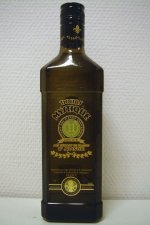
Doubs Mystique Carte d'Or
France (Pontarlier), 65% alc. vol. (130 proof), 0.5 liter
Made at the distillery of Les Fils d'Emile Pernot, located in Pontarlier in the Doubs region, France by the hands of David Nathan-Maister and Peter Schaf - also responsible for the Roquette 1797 among several other products, the Doubs Mystique Carte d'Or is a nice addition to the list of fine absinthes coming out of the Pernot distillery.

The Mystique immediately begins to fill the room with its complex aroma as soon as you start pouring it in a glass and the nice herbal character presents itself. Even though the aroma is certainly complex it has a good balance and is in no way off putting or "too much". The color is leaning slightly to the browner scale but it's still pretty to look at. The very clear notes of wormwood and with the classical notes of anise and fennel a little more in the background I'm not expecting very much from the louche but adding a slow, steady drip of iced water to the Doubs Mystique Carte d'Or really does present a nice enough louche. It turns light green and the aroma changes its profile a bit. It goes into a slightly more floral stage rather than the initial herbal complexity and it gives good promise of a good drink.

So, is drinking it as much of a pleasure as the aroma? Yes it is. The mouth-feel is surprisingly full and rich with a nice creaminess even though the character in itself is more herbal. I'm surprised of that, but happy. The taste lingers long and well and the only thing it leaves behind is the urge for another sip. I can honestly say that I really enjoy the Doubs Mystique Carte d'Or. As far as I know it is also going to be available in larger size bottles eventually which is a good thing... Half liter bottles of a good quality drink seems a little too little sometimes.

The Doubs Mystique Carte d'Or is definitely one of the absinthes on my list of recommendations.

Created: 9/30/2008  
Absinthe Roquette 1797
France (Pontarlier), 75% alc. vol. (150 proof), sample
Again a product from the Pernot distillery in Pontarlier, France. With its roots in the one-time-batch prototype "1797" which was released about a year ago this is the first batch of the production version. Based on a french recipe dating back to 1797, obviously, this is a bit different than many other absinthes. Not only that it's a historical recipe, but the fact that it dates farther back in time than those more common recipes from Duplais, Bedel etc which many products have been based on.

The Roquette is a rather vibrant light green, quite nice but actually not what I expected from the scent when opening the bottle. When pouring some in a glass it presents a sort of medicinal perfume and a good portion of alcohol. The Pontarlier wormwood could in my opinion be more dominant and I feel it lacks a bit of fruitiness to kick that aroma up a few notches but it's very interesting none the less.

With a very slow drip and really ice cold water the louche from the Roquette is quite good but you need to really let it take its time and the water should be really cold. If not, the louche will be weaker, and the drink won't be as pretty.

With the addition of water, the aroma opens up a bit and it turns into a rather nice, more balanced and inviting absinthe. The taste of the Roquette is quite unique and a nice change from most others. Despite of some of the notes above, the Roquette is a truly tasty absinthe and I really enjoy drinking it. It's not an "ordinary" absinthe at all, but it hold all the qualities and characteristics you'd expect from an absinthe and if you enjoy the taste of quality wormwood in your absinthe, the Roquette 1797 won't let you down. That's what it's all about.

Created: 9/30/2008  
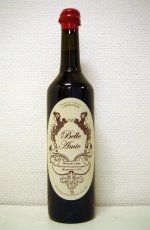
Belle Amie
France (Pontarlier), 72% alc. vol. (144 proof), 0.7 liter
The Absinthe Belle Amie is another absinthe coming out of the Les Fils de Emile Pernot distillery in Pontarlier, France. It is based on the traditional Nimes recipe and a rather nice effort at that.

Already the bottle itself is quite a treat with its sort of clean design and a very nice classy label. The red wax seal with the Pernot distillery's stamp on it completes the package. It's all good. This all leads up to the question if the content will live up to the expectations.

Well, the color is a nice green with a golden amber hue to it. Quite nice and completely free of sediment. The aroma which rises from the glass is a nice well balanced complex herbal mix of wormwood, fennel, anise and coriander up front - finely accompanied by the touch of hyssop. It's all very good though it's still just a little too flat in a way to be perfect. It lacks a little oomph to make it really amazing but it's certainly nice.

Slowly dripping ice water into it builds a decent louche and ends up just fine. There's nothing spectacular about the louche here but it turns out fine and the water further enhances the aroma slightly. The louched color is just a bit too dark green for me but I guess most people will not care about that.

The taste of the Belle Amie is as expected from the aroma not bad at all. It presents a nice complex taste, in some aspects with similarities to vintage absinthes I've had, though a bit lighter. I'm not saying the Belle Amie is as good as an excellent pre-ban, because it's not, but there are qualities in it that are excellent. Over all I'd say it's maybe a bit too light in some parts but it's definitely a quality absinthe, a nice interpretation of the Nimes recipe.

Keep your eyes open for it when you see it, it's produced in limited batches and they tend to go fast. Liqueurs de France would probably be your best bet online to get it, which I think you should. It's a nice refreshing drink.

View additional photos: 01 | 02 | 03 | 04